Learning Through Play: A Parent's Guide to Raising Kind, Curious, Capable Kids
Play is not a break from learning. It is how young children learn best. Here is what the research says, and how to use it at home in ten minutes a day.
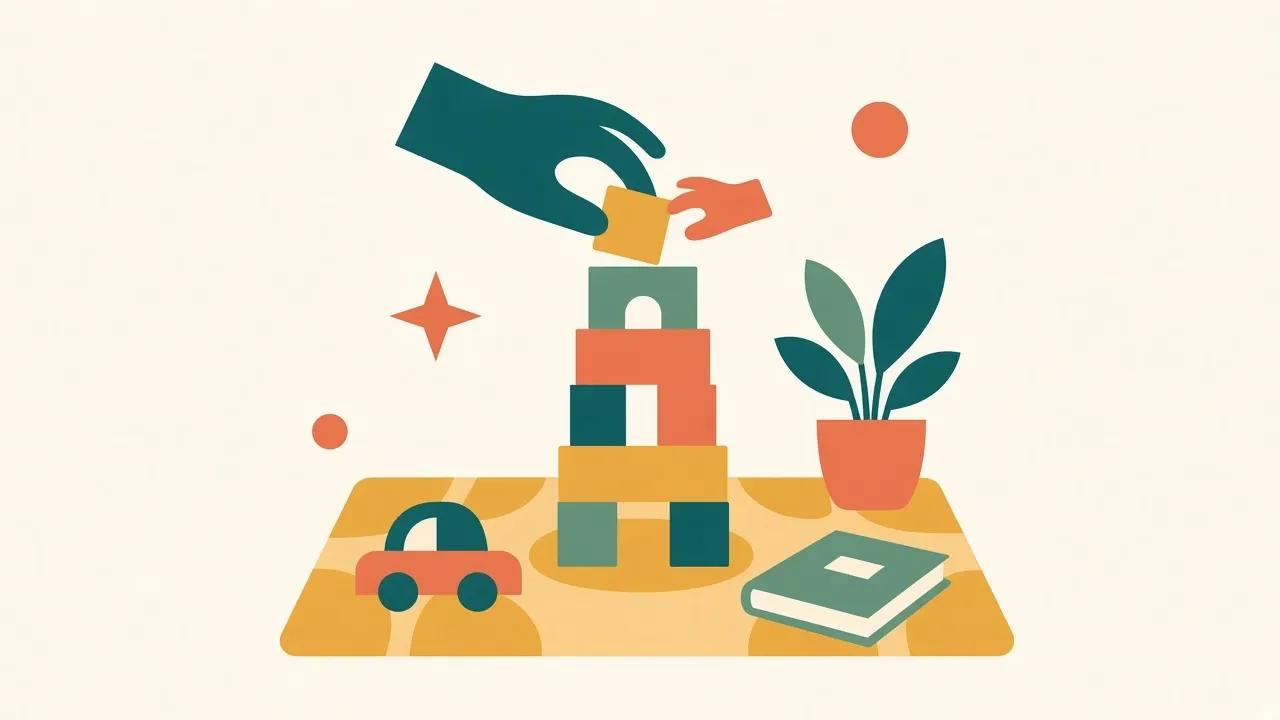
Learning through play means children build real skills, such as kindness, language, numbers and self-control, through games, stories and everyday moments instead of drills. The American Academy of Pediatrics (AAP) describes play as essential to healthy development, not a reward for finishing "real" work. You don't need special toys: ten minutes of your attention, a little space and a willingness to follow your child's lead go a long way.
Key takeaways
- Play is how young children learn best: it builds attention, language, problem-solving and social skills at the same time.
- The most useful play is joyful, meaningful, active, social and repeated, the five features researchers keep finding.
- "Guided play", where your child leads and you gently add a challenge, works better than lecturing and better than leaving them entirely alone.
- Simple, open-ended things (boxes, blocks, crayons, water, pots) beat flashy toys.
- Ten focused minutes a day, done often, matters more than long, perfect sessions.
Learning through play: an approach where children gain skills and knowledge by doing something they enjoy and choose freely, with an adult nearby to talk, notice and gently stretch the activity.
Guided play: play that the child leads, while the adult shapes the setting or asks questions with a learning goal in mind.
Why play works: the science in plain words
In its 2018 clinical report The Power of Play, the AAP explains that play supports the skills children need for school and life: executive function (planning, focusing, switching between tasks), language, early maths and getting along with others. The same report notes that playful, responsive time with a caring adult helps children cope with stress.
The Harvard Center on the Developing Child calls these everyday exchanges "serve and return": your child "serves" with a sound, a look or a question, and you "return" it with words, a smile or a turn. Repeated thousands of times, these small back-and-forths help build the brain's architecture.
A research review for the LEGO Foundation (Zosh and colleagues, 2017) found that the play that teaches most tends to be joyful, meaningful, actively engaging, iterative (trying again and again) and socially interactive. That list is a handy checklist for any activity you plan.
Five kinds of play and what each one builds
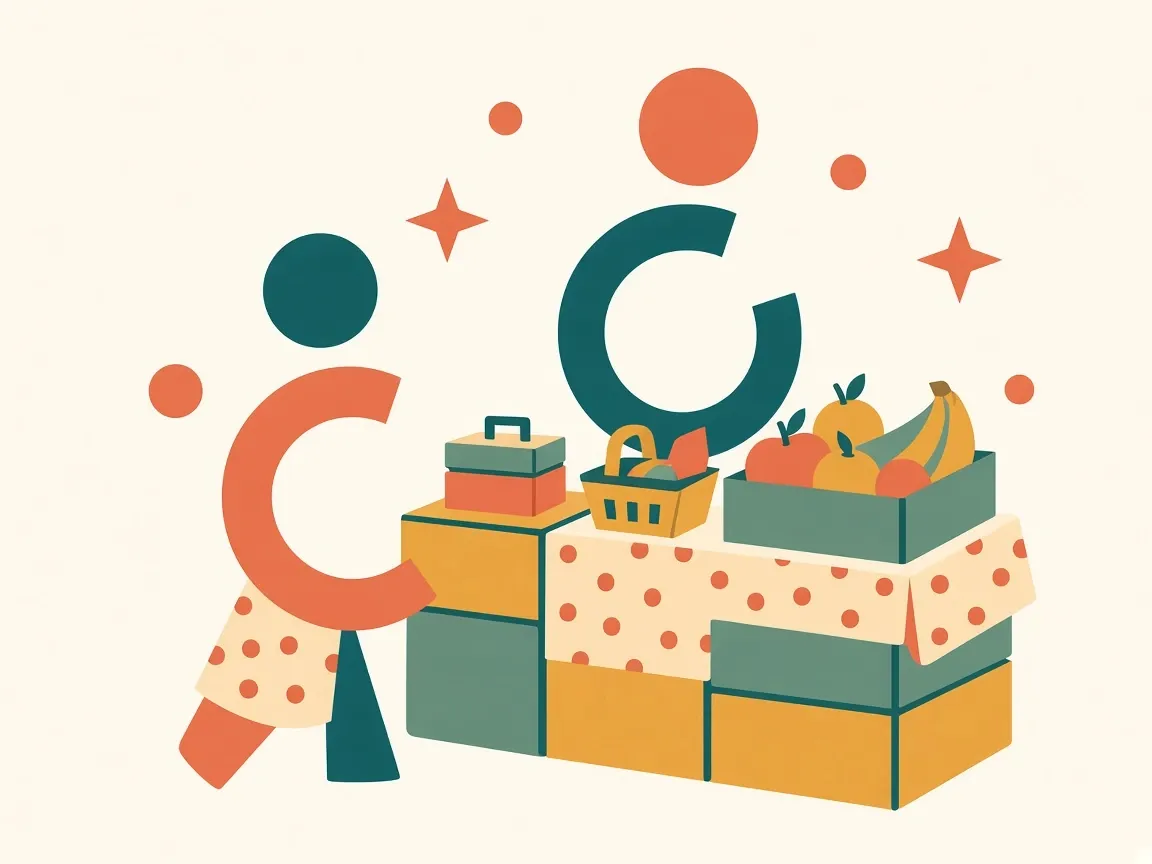
Pretend play
Running a shop, a vet clinic or a rocket station teaches vocabulary, turn-taking and seeing things from someone else's point of view, the starting point of empathy (see our guide to teaching kindness).
Building and making
Blocks, boxes, sand and play dough invite planning, testing and fixing. A collapsed tower is a free lesson in patience.
Moving and outdoor play
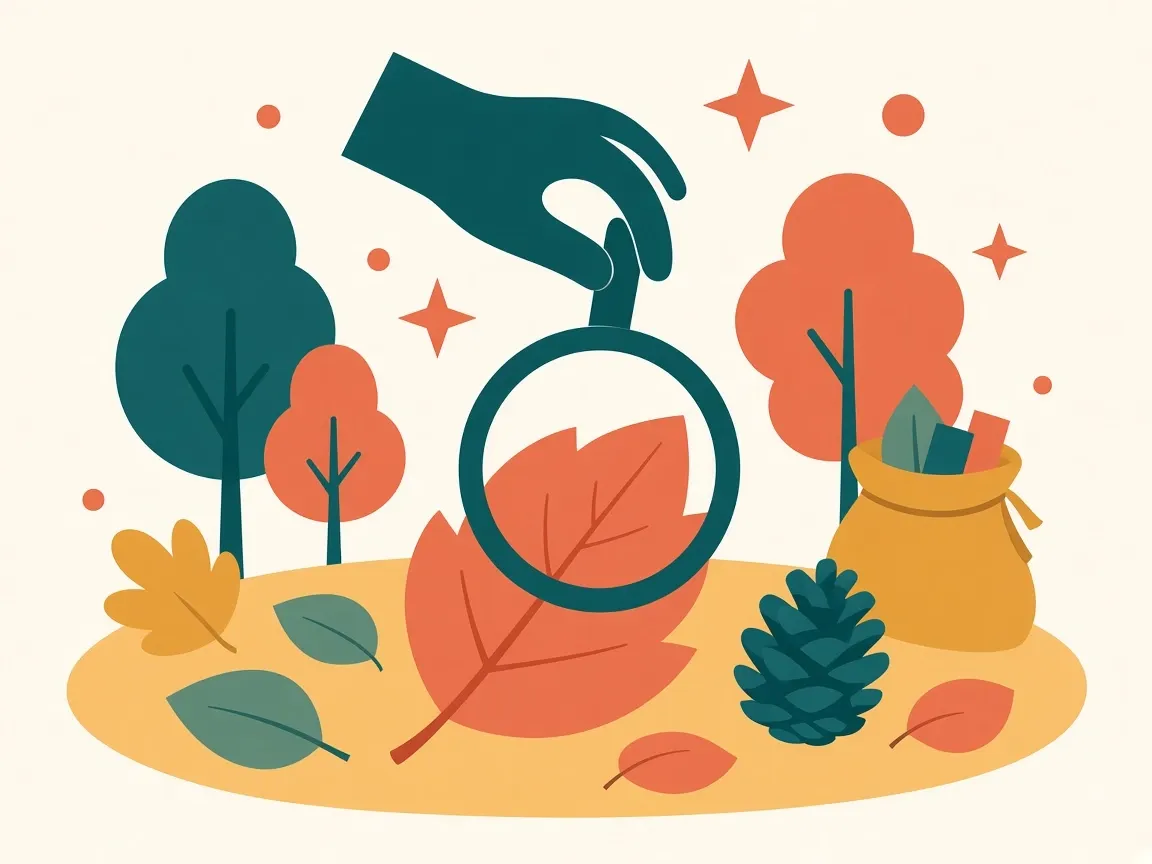
Running, climbing and balancing build strength and coordination, and the outdoors is full of questions. A walk becomes a hunt for three kinds of leaves.
Games with rules
Board games, hide-and-seek and "Simon says" train waiting, remembering rules and losing gracefully, key parts of self-control. When games end in tears, our guide to big feelings can help.
Real-life play
For young children, helping to cook, sort socks or water plants is play. It is also how they start to feel capable (see chores by age).
Age-by-age ideas
| Age | What play looks like | Try this (about 10 minutes) |
|---|---|---|
| 1–3 years | Exploring with hands and mouth, copying adults, simple pretend | Fill a tray with cups and water; take turns pouring and naming "full" and "empty". |
| 3–5 years | Rich pretend play, building, endless "why?" | Set up a cardboard shop; your child sets prices with pebbles and you "pay". |
| 6–8 years | Games with rules, collecting, early projects | Invent a board game together on paper, rules and all. |
| 9–12 years | Strategy, building, teams, hobbies | Give a challenge: build the tallest tower from 20 sheets of paper and tape. |
How to do guided play at home: 5 steps
- Follow their lead. Join what your child is already doing instead of starting something new.
- Narrate, don't direct. "You put the red block on top. It's wobbling!" builds language without taking over.
- Ask one open question. "What could make it stronger?" invites thinking more than "Is that a tower?"
- Add a small twist. A new rule, a missing piece or a "what if" keeps the challenge just above easy.
- Stop while it's still fun. Ending on a high note makes them want to come back tomorrow.
Play for kind, curious and capable kids
The three values behind Out of Usual all grow through play. Kindness grows in pretend play and shared games. Curiosity grows when questions are welcomed, not rushed (read how to encourage curiosity). Capability grows when children are trusted with real tasks and allowed to struggle a little.
Routines help too. Predictable mornings and bedtimes free up energy for play, and a clear family plan for screen time protects the hours that are best spent with hands, voices and each other.
Frequently asked questions
How much play does my child need each day?
There is no single magic number for play. For physical play, the WHO recommends at least 180 minutes of varied physical activity spread across the day for children aged 1 to 4. Beyond that, short daily moments of play with a grown-up matter more than long, planned sessions.
Do I need educational toys for learning through play?
No. Pediatric guidance stresses that simple, open-ended things such as blocks, boxes, crayons, balls and pretend kitchen items, plus an engaged adult, support learning better than expensive electronic toys.
Is learning through play only for toddlers?
No. Play changes with age, from peekaboo and pretend play to board games, building projects and invented sports, but children keep learning through play well into primary school.
Related reading
- Big Feelings in Kids: How to Help Your Child with Anger, Worry and Sadness
- How to Teach Kids Kindness and Empathy: Everyday Ideas by Age
- How to Encourage Curiosity in Children: Turning Why Into a Habit
- A Calm Morning Routine for Kids: How to Get Out the Door Without Yelling
- Screen Time for Kids by Age: What the Guidelines Say and a Family Plan That Works
- Age-Appropriate Chores for Kids: A Simple List From Toddlers to Tweens
Sources
- Yogman M, Garner A, Hutchinson J, et al. The Power of Play: A Pediatric Role in Enhancing Development in Young Children. Pediatrics. 2018;142(3):e20182058.
- Center on the Developing Child, Harvard University. Serve and Return.
- Zosh JM, Hopkins EJ, Jensen H, et al. Learning through play: a review of the evidence. The LEGO Foundation; 2017.
- Weisberg DS, Hirsh-Pasek K, Golinkoff RM, Kittredge AK, Klahr D. Guided Play: Principles and Practices. Current Directions in Psychological Science. 2016;25(3):177-182.
- World Health Organization. Guidelines on physical activity, sedentary behaviour and sleep for children under 5 years of age. 2019.
This article is general information, not medical advice. If you are worried about your child’s health or development, please talk to a doctor.