
Screen Time for Kids by Age: What the Guidelines Say and a Family Plan That Works
What paediatricians and the WHO actually recommend at each age, why how you use screens matters as much as how long, and a family plan you can set up in one evening.
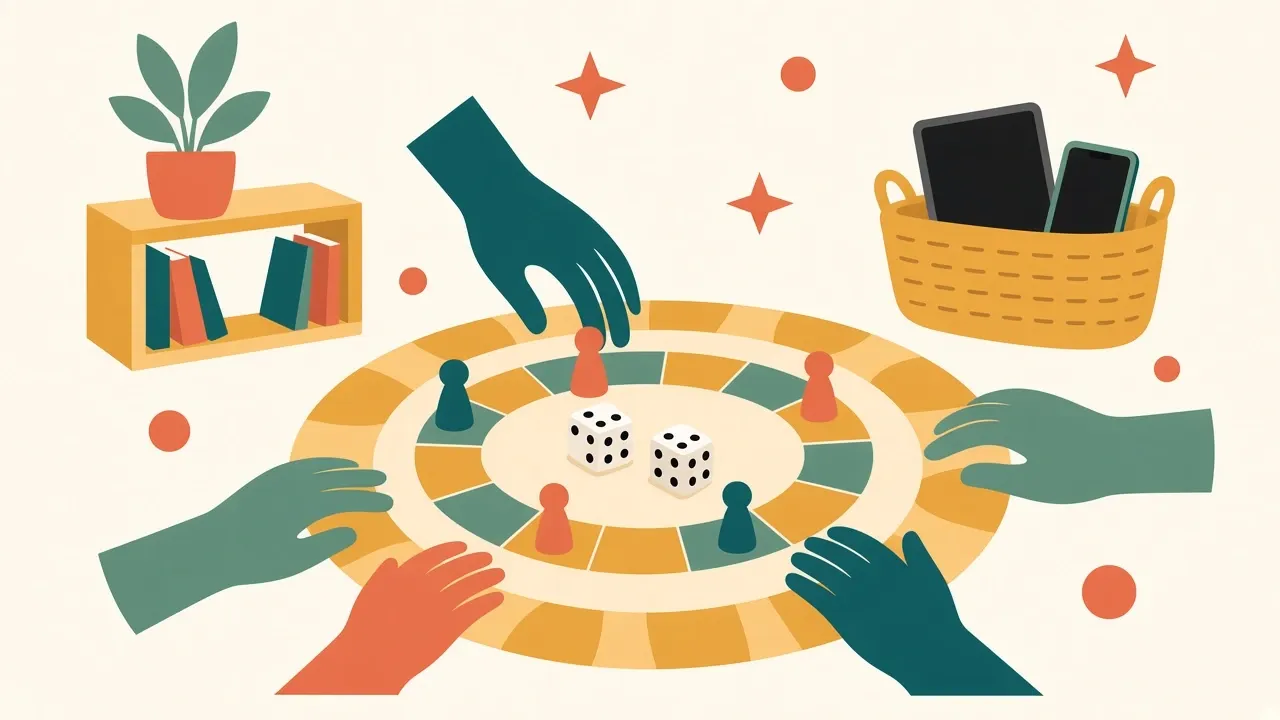
The World Health Organization (WHO) advises no screen time for children under 2 and no more than one hour a day for ages 2 to 4, while the American Academy of Pediatrics (AAP) dropped its fixed daily limits in January 2026 and now asks families to look at the child, the content, calm, what the screen crowds out and communication. For older children, consistent family rules that protect sleep, movement and time together work better than counting minutes.
Key takeaways
- WHO (2019): no screen time under 2; up to 1 hour a day at ages 2 to 4, and less is better.
- AAP (2026): no fixed time limit; it asks about the 5 Cs: Child, Content, Calm, Crowding out and Communication.
- The AAP's older 2016 numbers (such as 1 hour a day at ages 2 to 5) are still widely quoted, but they are no longer its current approach.
- At every age: protect sleep, play, activity and time together, and watch together when you can.
- Screen-free zones and times (meals, bedrooms, bedtime) do much of the work.
Co-viewing: watching or playing with your child and talking about what you see, so the screen becomes a shared activity rather than a solo one.
Family media plan: a simple written agreement about when, where and how your family uses screens, including the adults.
What the guidelines say, age by age
Two sets of official guidance are quoted most often. The WHO sets time limits for children under 5. The AAP's 2016 advice did the same, but in January 2026 the AAP replaced it with a statement that has no fixed daily limit (Digital Ecosystems, Children, and Adolescents, Pediatrics, 2026).
| Age | WHO (2019, under-5s) | AAP (2016, now replaced) |
|---|---|---|
| Under 18 months | Under 1 year: screen time not recommended | Avoid screen media other than video chatting |
| 18–24 months | 1 year: sedentary screen time not recommended; 2 years: no more than 1 hour, less is better | If introducing media, choose high-quality content and watch together |
| 2–5 years | 3–4 years: no more than 1 hour, less is better | Limit to 1 hour a day of high-quality programmes, co-view |
| 6 years and up | (not covered) | Consistent limits; screens shouldn't replace sleep, physical activity or other healthy behaviours |
What the AAP asks instead: the 5 Cs
The AAP's 2026 approach is built around five words. Here is how we read them, in our own words:
- Child: does this use of screens suit this child's age, needs and temperament?
- Content: is what they watch or play good quality, and free of tricks to keep them hooked?
- Calm: can your child calm themselves without a screen, or is the screen always the soother?
- Crowding out: is screen time pushing out sleep, play, movement, reading or family time?
- Communication: does it help your child connect with other people, or replace talking with them?
The AAP's Family Media Plan suggests screen-free times such as meals and bedtime, which is why screens come up in our bedtime routine guide.
How to use screens well
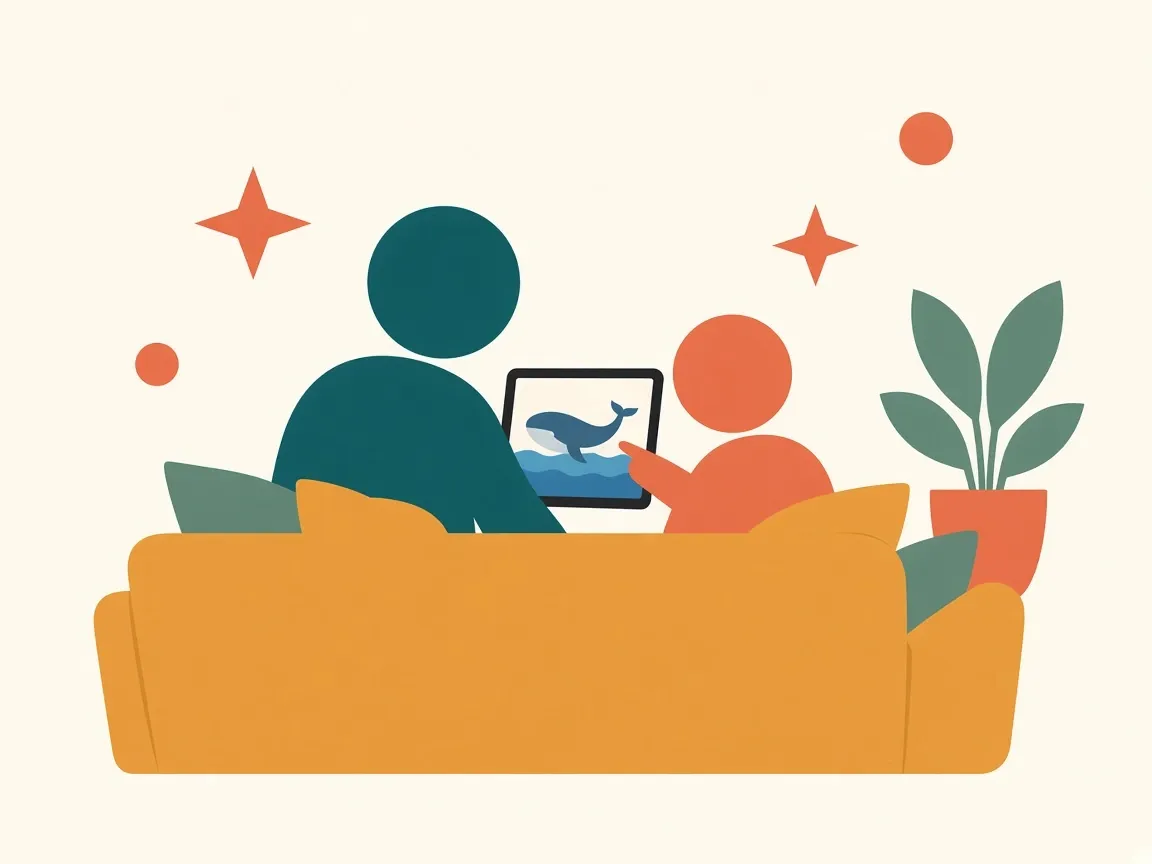
- Watch together when you can. Pause and ask: "What do you think happens next?" Questions turn watching into thinking (see encouraging curiosity).
- Choose slow, simple content. Calm pacing, no ads, clear stories.
- Connect it to real life. Watched a show about whales? Draw one, find a book, visit an aquarium.
- Prefer creating over scrolling. Making a stop-motion film or recording a song is different from endless autoplay.
- Model it. Children notice when adults' phones come to dinner.
Build your family media plan in 5 steps
- Pick screen-free zones: bedrooms, the dinner table, the car on short trips.
- Pick screen-free times: mornings before school (see our morning routine guide), meals and the hour before bed.
- Decide the "how much" for each child, using the table above as a starting point.
- Agree the "what": a short list of approved shows, games and apps.
- Write it down and review it every few months. The AAP offers a free Family Media Plan tool online.
Switching off without a meltdown
- Give a warning: "Two more minutes, then we stop at the end of the episode."
- Stop at natural endings, not mid-level or mid-scene.
- Use a visual timer so the screen, not you, decides when time is up.
- Have a "next" ready: a snack, a walk, a game. Transitions are easier toward something.
- Name the feeling: "It's hard to stop when it's fun." Then hold the limit kindly.
What screens can't replace
Young children learn most from back-and-forth play with people who care about them: the heart of our learning through play approach. Screens can be one part of a happy childhood, as long as they leave plenty of room for everything else.
Frequently asked questions
Do video calls with grandparents count as screen time?
Video chatting is treated differently. The AAP's guidance for children under 18 months makes an exception for video calls, because they are live, two-way conversations with people who love the child. Stay nearby and join in.
Are educational shows okay for toddlers?
From 2 to 4 years, the WHO suggests no more than one hour a day, and less is better. The AAP's older 2016 guidance said the same for ages 2 to 5; its 2026 statement drops the time limit and asks you to look at content, calm and what the screen crowds out. Either way, choose high-quality programmes and watch them together.
Is it okay to use a screen to calm my child down?
Occasionally, in a pinch, it happens in every family. But the AAP cautions against using media as the main way to calm children, because they also need to learn to calm themselves. Building other calming tools helps.
Related reading
Sources
- American Academy of Pediatrics. Digital Ecosystems, Children, and Adolescents (policy statement). Pediatrics. 2026;157(2):e2025075320.
- AAP Council on Communications and Media. Media and Young Minds. Pediatrics. 2016;138(5):e20162591.
- World Health Organization. Guidelines on physical activity, sedentary behaviour and sleep for children under 5 years of age. 2019.
- American Academy of Pediatrics. Family Media Plan (HealthyChildren.org).
This article is general information, not medical advice. If you are worried about your child’s health or development, please talk to a doctor.