
A Calm Morning Routine for Kids: How to Get Out the Door Without Yelling
Most morning battles are really about too many decisions and too little time. A short picture routine and a ten-minute evening reset change everything.
Calmer mornings come mostly from what you do the night before and from a short, picture-based routine your child can follow without constant reminders. When children know exactly what comes next and the clock isn't tight, there is much less to argue about.
Key takeaways
- Move decisions to the evening: clothes, bags, lunch, breakfast plan.
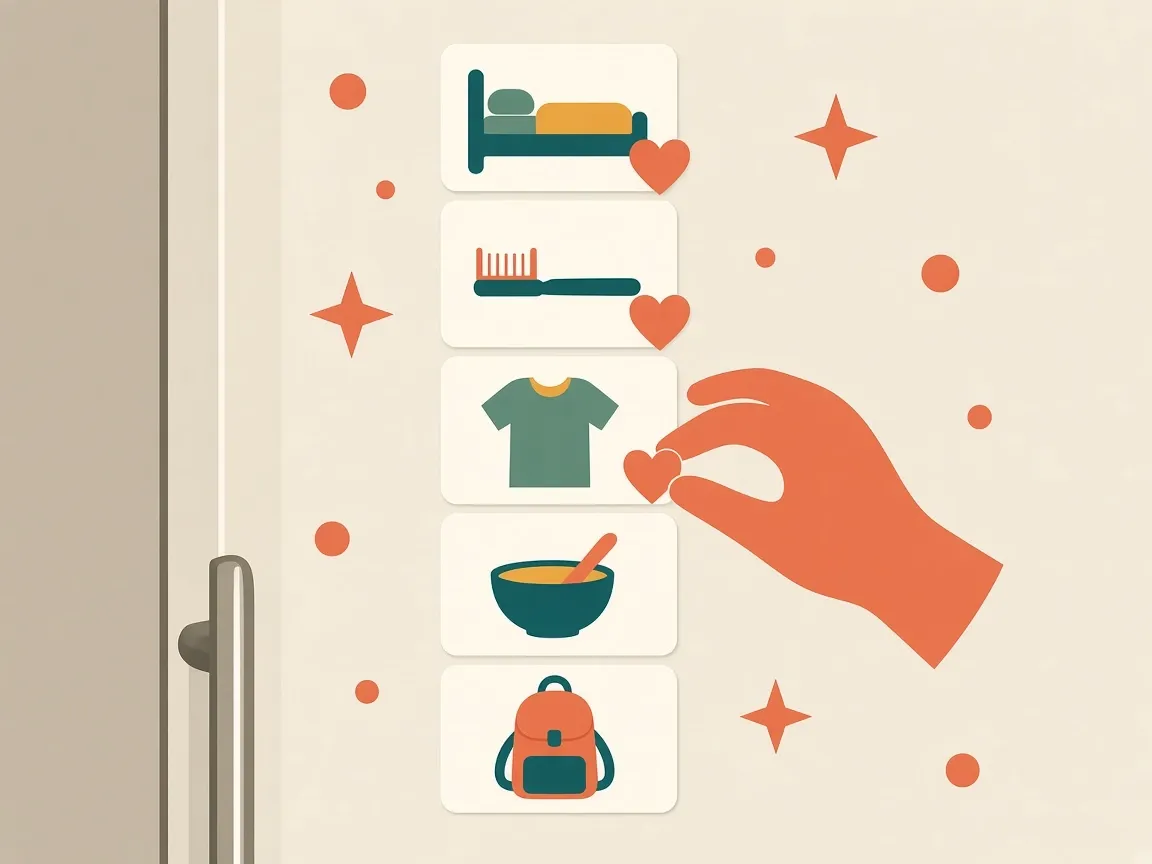
- Use a picture routine of 4 to 6 steps so your child checks the chart, not your voice.
- Same order every day: predictability is what makes it automatic.
- Build in a time buffer; rushing is the main trigger for meltdowns, yours and theirs.
- Keep screens off until everyone is ready to leave.
Routine: a set of steps done in the same order at roughly the same time, so they become automatic and need less willpower.
Visual schedule: a sequence of pictures showing the steps of a routine, so children who can't read yet can follow it on their own.
Why routines make mornings easier
A review by Mary Spagnola and Barbara Fiese (2007) brought together research on family routines and rituals and found them linked to children's healthy development and to families' sense of order and well-being. The CDC's positive parenting guidance also stresses structure and consistency for young children.
There's a brain reason, too. Remembering steps, switching between tasks and resisting distractions use executive function skills, which are still developing in childhood. The Harvard Center on the Developing Child's activities guide suggests external supports, such as pictures and lists, to take some of that load off children's working memory. A chart on the fridge does exactly that.
The 10-minute evening reset
- Clothes out, including socks and shoes, with one small choice for your child.
- Bag packed and by the door, with the homework folder inside.
- Lunch or snacks ready in the fridge.
- Breakfast decided, with bowls and spoons on the table if possible.
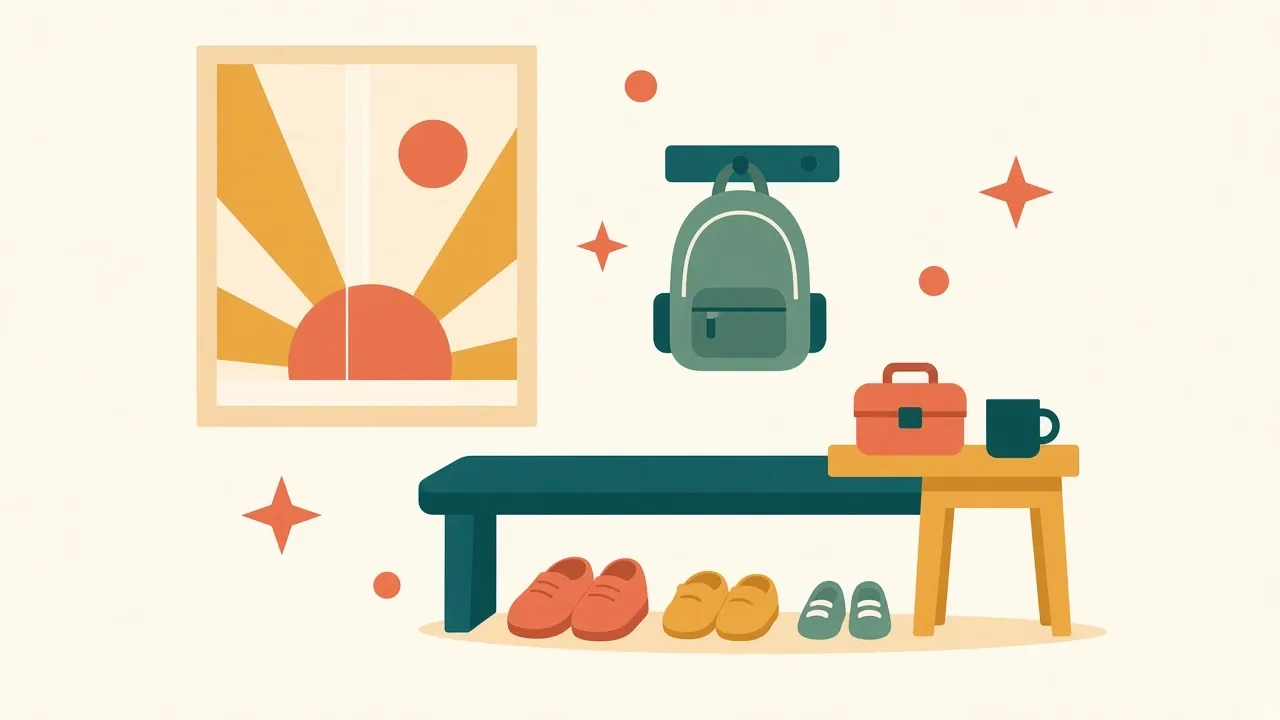
- Shoes, coats and keys in one spot, the "launch pad".
The morning routine in 5 pictures
- Get up and use the toilet.
- Get dressed.
- Eat breakfast.
- Brush teeth.
- Shoes, coat, bag: ready to go!
Let your child help make the chart: draw it, choose the pictures, decide where it goes. Children follow plans they helped create more willingly. Point to the chart instead of repeating instructions: "What's next on your chart?"
What children can do alone, by age
| Age | Morning jobs they can usually manage | Your role |
|---|---|---|
| 2–3 years | Pick between two outfits, put on easy items, carry their cup | Do it together, name each step, sing a routine song |
| 4–5 years | Dress themselves with help on fiddly bits, follow a picture chart | Point to the chart, check in, praise effort |
| 6–8 years | Full routine with reminders, pack their bag with a checklist | Prepare the night before together, step back gradually |
| 9–12 years | Run their own routine, set an alarm, make simple breakfast | Agree on the plan, let natural consequences teach (within reason) |
Common snags and what helps
- The dawdler: use a timer or a "beat the song" playlist; make one task a race against you, not each other.
- Morning meltdowns: check sleep first; tired children have little patience. Our bedtime routine guide can help.
- Screens: a show "while you get ready" rarely works. Keep screens off until shoes are on, and see our screen time guide.
- Siblings bickering: stagger bathroom times and give each child a separate job.
- You're running late: say it out loud, calmly: "We're late, so we'll skip X today." Kids mirror your stress.
Start with connection
Before the first instruction, try a minute of connection: a cuddle, a joke, a "what are you looking forward to today?". Children who feel close to us are usually more willing to cooperate.
Routines are also a quiet way to build capability: each step a child manages alone is a small win. That idea runs through our learning through play guide and our list of chores by age.
Frequently asked questions
How long should a school morning routine take?
It depends on your child's age and your commute, but build in a 15-minute buffer beyond what the tasks really need. Time pressure is what turns small delays into big fights.
Do reward charts work for morning routines?
A picture chart works mainly as a reminder that lets your child see what comes next and feel progress. Ticking or adding a sticker can be satisfying in itself; big prizes usually aren't needed. Praise effort and independence.
What can I do if my child refuses to get dressed?
Lay out clothes the night before with one small choice, make it a game ('Can you beat the song?'), and keep your tone light. For younger children, getting dressed next to you rather than alone often solves it.
Related reading
- Learning Through Play: A Parent's Guide to Raising Kind, Curious, Capable Kids
- Bedtime Routine for Kids: A Simple, Science-Backed Plan for Easier Nights
- Age-Appropriate Chores for Kids: A Simple List From Toddlers to Tweens
- Screen Time for Kids by Age: What the Guidelines Say and a Family Plan That Works
Sources
- Spagnola M, Fiese BH. Family Routines and Rituals: A Context for Development in the Lives of Young Children. Infants & Young Children. 2007;20(4):284-299.
- Center on the Developing Child, Harvard University. Enhancing and Practicing Executive Function Skills with Children from Infancy to Adolescence (activities guide).
- Centers for Disease Control and Prevention (CDC). Positive Parenting Tips.