
Raising Resilient Kids: How to Help Your Child Bounce Back From Mistakes
Resilience is not something children are born with or without. It grows from ordinary moments: a fall, a lost game, a wrong answer, and how we respond.
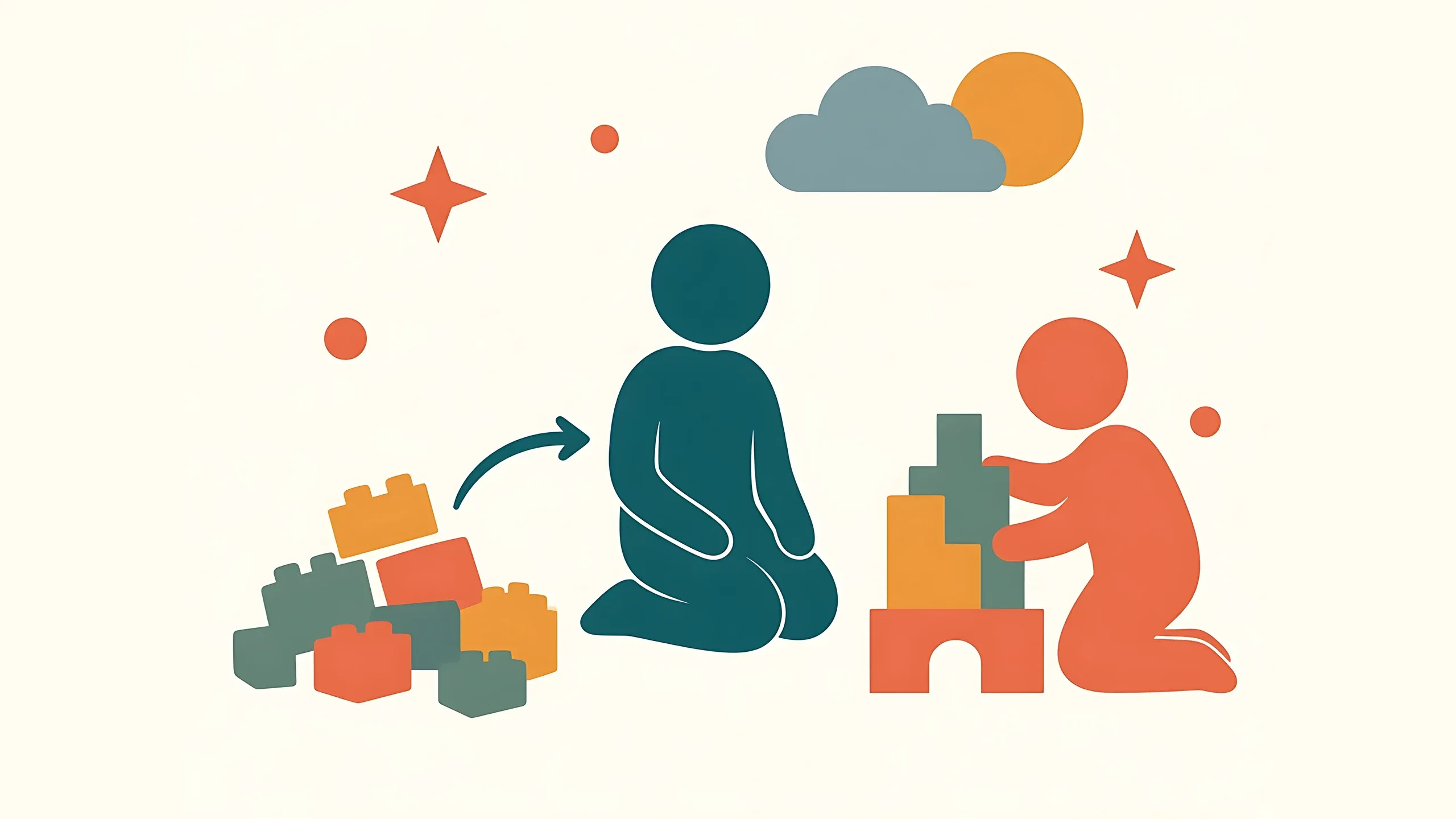
Resilient children are not children who never fall apart. They are children who have learned, many times over, that they can fall apart and come back. You build that by staying calm when things go wrong, letting your child struggle a little, and treating mistakes as information, not disaster.
Try tonight: the 60-second version
- Share a mistake at dinner. Ask everyone, including you: "What's something you got wrong today, and what did you learn?"
- Use the word "yet". "You can't do it yet."
- Count to ten before helping when your child struggles. Often they'll find the next step themselves.
- Name the feeling, then the next step: "You're disappointed. What could you try next?"
What resilience really is
Psychologist Ann Masten, who has studied resilience for decades, famously described it as "ordinary magic". Resilience, she found, doesn't come from rare inner superpowers. It comes from everyday things: caring relationships, a sense of competence, problem-solving skills and hope.
Harvard's Center on the Developing Child puts it simply: the single most common factor among children who do well despite hardship is at least one stable, committed relationship with a supportive parent, caregiver or other adult. That relationship acts like a buffer, and it helps children build the skills to plan, adapt and regulate themselves.
How you see failure shapes how they see it
Here is a finding many parents find surprising. Kyla Haimovitz and Carol Dweck asked parents whether they saw failure as helpful or harmful for learning. Parents who saw failure as harmful reacted to their children's setbacks with more worry and focus on ability, and their children were more likely to believe intelligence is fixed.
What predicted children's mindsets wasn't what parents believed about intelligence. It was how parents reacted to failure. Your face, your words and your tone when a test comes back with red marks teach more than any poster on the wall.
Say this instead of that
| Instead of… | Try… |
|---|---|
| "Don't cry, it's only a game." | "You really wanted to win. Losing feels rotten." |
| "Here, let me do it." | "Which part is tricky? What have you tried?" |
| "You're not stupid!" | "This is hard. Hard means your brain is learning." |
| "It doesn't matter." | "It matters to you. What would you do differently next time?" |
| "You're so talented, you'll get it." | "You've learned hard things before. Remember riding your bike?" |
| "Never mind, you don't have to do it." | "Let's take a break and come back in ten minutes." |
Age by age: building resilience
| Age | Typical reactions | What helps |
|---|---|---|
| Toddler (1–3) | Frustration tantrums when blocks fall or shoes won't go on | Stay close, name the feeling, help just enough to get unstuck |
| Preschool (3–5) | Hates losing, quits games, "I can't!" | Play turn-taking games often, model losing gracefully, celebrate trying |
| School age (6–9) | Fear of being wrong in class, comparisons, perfectionism | Talk about mistakes as learning, tell stories of your own failures, praise strategy |
| Tweens (10–12) | Self-criticism, worry about others' opinions, avoiding challenges | Listen more than fix, help break big problems into steps, encourage new activities |
Myth vs fact
- Myth: Resilience is a fixed trait. Fact: It is a set of skills and relationships that can be built at any age (Masten, 2001).
- Myth: Protecting children from failure keeps them confident. Fact: Small, survivable setbacks with support are how confidence grows.
- Myth: Resilient kids don't get upset. Fact: They get upset and recover. Feeling bad is part of the process.
- Myth: Toughening them up with harsh words builds grit. Fact: Warmth plus high expectations works better. Children take risks when they feel safe.
One afternoon, step by step
Maya (6) is doing a 48-piece puzzle. After ten minutes, she shoves it away: "This is stupid! I'm never doing puzzles again!"
- Stay calm and close. You sit beside her. You don't touch the puzzle.
- Name the feeling. "You're so frustrated. You've been working really hard and it's not coming together."
- Wait. Maya huffs and crosses her arms. You say nothing for a moment. Your calm is doing the work.
- Offer a small way back in. "Want to find all the edge pieces first? That's what I do."
- Help just enough. She finds two edges and you find one. Within five minutes, she's absorbed again.
- Reflect afterwards. At bedtime: "You were so cross with that puzzle, and then you found a way. How did you do that?" She shrugs, smiling. That's the memory you want her to keep.
Your resilience checklist
- ☐ I let my child struggle a little before I step in
- ☐ I name feelings before solving problems
- ☐ I share my own mistakes out loud
- ☐ We play games where someone has to lose
- ☐ I praise effort, strategies and progress
- ☐ My child has chances to help others and contribute
- ☐ Our home has predictable routines and plenty of sleep
- ☐ My child has at least one trusted adult outside our home
If this doesn't work
- Meltdowns are huge and frequent. Check basics first: sleep, hunger, stress. Then use the tools in our big feelings guide.
- Your child avoids anything new. This may be worry rather than low resilience. Our guide to helping an anxious child can help.
- The tantrums are mostly frustration in a toddler. That's developmentally normal. See toddler tantrums.
- They still want to be best at everything. Revisit how you praise. See how to praise kids.
- Setbacks come from a big change, like a new school? See starting school and transitions.
When to talk to a professional
Talk to your doctor or a child psychologist if your child's distress after mistakes is extreme, lasts for days, leads to self-harm talk ("I wish I wasn't here"), or stops them taking part in school or play. Ongoing perfectionism and constant fear of failure can be signs of anxiety, and support works well.
Bedtime helpers
Mira Builds a Bridge is about keeping going on a big, hard project and discovering that some things can't be built alone, and The Cloud That Was Afraid of Rain is about facing something scary and finding it was survivable. For siblings who compete over every win, pair this with our guide to sibling rivalry.
Frequently asked questions
My child cries every time they lose a game. Is that normal?
Yes, especially before age seven or eight. Losing triggers real disappointment, and the skills to manage it are still growing. Acknowledge the feeling, keep playing games regularly and model being a calm loser yourself.
Should I let my child fail on purpose?
You do not need to engineer failure; life provides plenty. The key is not rescuing too fast. Let your child struggle a little with tasks that are within reach, and stay close and calm while they do.
How do I respond when my child says 'I'm stupid'?
Do not argue or rush to reassure. Reflect the feeling ('You're really frustrated with this') and then separate the person from the problem: 'This is hard. You're not stupid, you're learning something new.'
What is the single most important thing for resilience?
According to Harvard's Center on the Developing Child, the most common factor in children who do well despite adversity is at least one stable, committed relationship with a supportive adult.
Is perfectionism a sign of high achievement?
Not necessarily. High standards can be healthy, but intense fear of mistakes, avoiding new things, or meltdowns over small errors suggest a child needs help seeing mistakes as part of learning.
Related reading
- How to Praise Kids: Why "Good Job" Backfires and What to Say Instead
- Starting School: How to Help Your Child With the Transition (and Goodbye Tears)
- Sibling Rivalry: How to Stop the Fighting Without Playing Referee
- Big Feelings in Kids: How to Help Your Child with Anger, Worry and Sadness
- How to Help an Anxious Child: Calm Support That Builds Confidence
- Toddler Tantrums: Why They Happen and How to Stay Calm Through Them
Sources
- Masten AS. Ordinary magic: Resilience processes in development. American Psychologist. 2001;56(3):227-238.
- Haimovitz K, Dweck CS. Parents' Views of Failure Predict Children's Fixed and Growth Intelligence Mind-Sets. Psychological Science. 2016;27(6):859-869.
- Center on the Developing Child, Harvard University. A Guide to Resilience.
- American Psychological Association. Resilience guide for parents and teachers.
- American Academy of Pediatrics, HealthyChildren.org. Building Resilience.
This article is general information, not medical advice. If you are worried about your child’s health or development, please talk to a doctor.