
Toddler Tantrums: Why They Happen and How to Stay Calm Through Them
Tantrums are a normal part of development, not a sign you are failing. Here is what is going on in your toddler's brain and a calm plan for before, during and after.
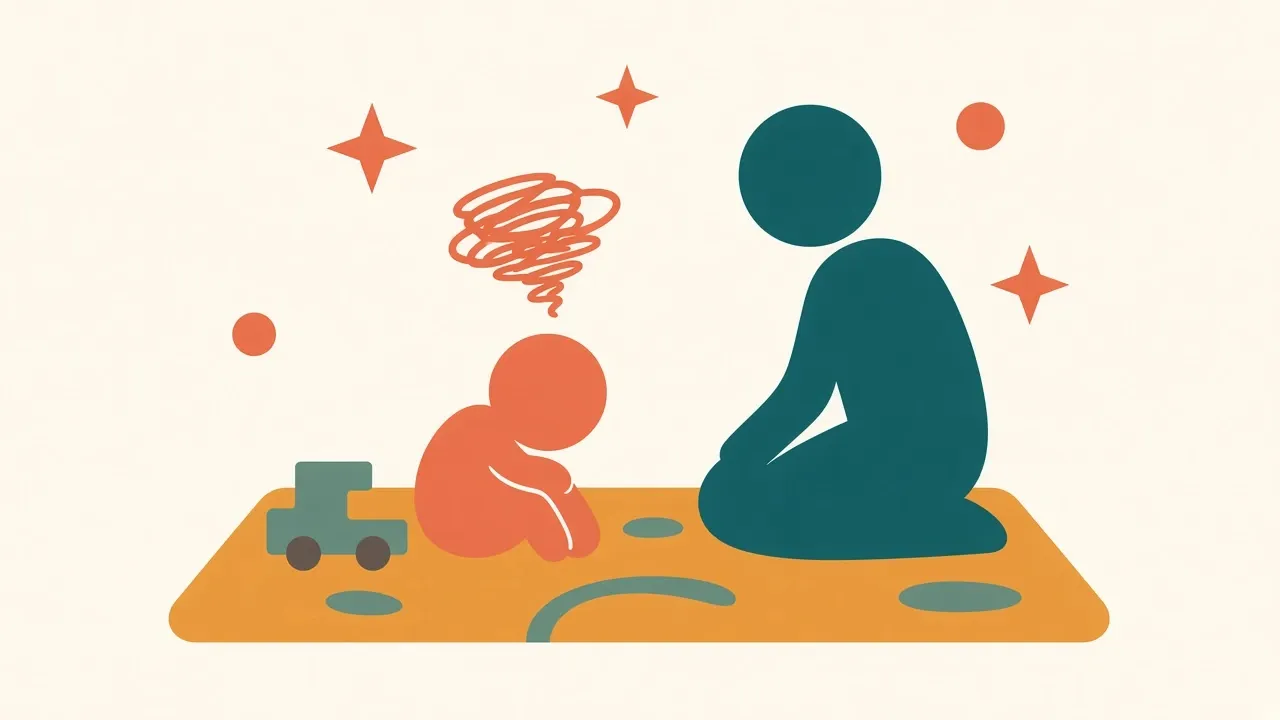
Tantrums are a normal part of development: they happen most between ages 1 and 3 and tend to ease after 3, as language and self-control grow. The most helpful response is to keep everyone safe, stay calm and close, hold the limit kindly, and teach calming skills once the storm has passed.
Key takeaways
- Tantrums are normal, not a sign of bad parenting or a "bad" child.
- Hunger, tiredness and big changes are common triggers, so plan around them.
- During a tantrum, say little, stay close and keep everyone safe.
- Never ignore hitting, biting or danger; step in calmly and firmly.
- Teach calming skills (like balloon breathing) in calm moments, not mid-meltdown.
Tantrum: an intense burst of crying, shouting or flailing when a young child's feelings outgrow their ability to manage them.
Self-regulation: the developing ability to manage feelings, attention and behaviour. In toddlers it is still under construction.
Why toddlers have tantrums
Toddlers want independence and have strong feelings, but their language and self-control are only beginning to develop. The executive function skills that help us pause, wait and switch plans develop slowly across childhood (Harvard Center on the Developing Child). So when a toddler is tired, hungry or told "no", the feeling can simply be bigger than the brakes. Our big feelings guide goes deeper into how children build these skills.
Common triggers by age
| Age | Typical triggers | What helps |
|---|---|---|
| 1–2 years | Hunger, tiredness, not being understood | Snacks, naps, simple words and gestures |
| 2–3 years | "Me do it!", transitions, being told no | Small choices, warnings before changes |
| 3–4 years | Disappointment, rules feeling unfair | Naming feelings, predictable routines |
| 4 years and up | Fewer tantrums; frustration, big emotions | Calm-down tools, problem-solving afterwards |
A calm plan: before, during, after
Before
- Set them up for success: snacks when out, protected nap and sleep time.
- Give small choices: "Red cup or blue cup?" instead of yes/no questions.
- Warn before transitions: "Two more slides, then we go home."
- Notice good moments: specific praise ("You waited so patiently!").
During
- Keep everyone safe. Move breakable or dangerous things, or gently move your child.
- Stay calm and close. Few words, soft voice: "I'm here. You're really upset."
- Hold the limit. "You wanted the biscuit. The answer is still no."
- Step in at once for hitting or biting: "I won't let you hit." Move their body away.
- Wait. Tantrums end. Your calm is the anchor.
After
- Reconnect with a hug or quiet time together.
- Name what happened in a few words: "You were so angry when the tower fell."
- Practise a calming skill together, like the one below.
- Repair if needed: our guide to teaching kids to apologise shows how to make things right without forced "sorrys".
The American Academy of Pediatrics advises against spanking and harsh verbal discipline; calm, consistent limits work better over time (Sege & Siegel, 2018). And if you feel your own anger rising, it is fine to take a short break while another adult steps in, or once your child is safe.
Balloon breathing: a calming game

Practise when everyone is calm so it is ready for harder moments:
- Put your hands on your bellies.
- Breathe in slowly through the nose and "blow up the balloon" in your tummy.
- Breathe out slowly through the mouth and let the balloon shrink.
- Repeat three times, then do one "giant balloon" for fun.
This kind of play-based practice is at the heart of learning through play.
When to talk to your child's doctor
Talk to your paediatrician or health visitor if you are worried, for example if tantrums are very frequent or long, your child often hurts themselves or others, tantrums are getting worse after age 4, or you are struggling to cope. Some children who melt down a lot are also very worried or fearful; our guide to helping an anxious child may help.
Frequently asked questions
At what age do tantrums stop?
According to the American Academy of Pediatrics' HealthyChildren site, tantrums happen most between ages 1 and 3 and tend to get better after 3, although they do not disappear completely. Growing language and self-control help.
Should I ignore a tantrum?
You can calmly ignore the shouting and flailing while staying close and safe. Do not ignore hitting, biting, kicking or throwing, or any danger: step in at once, calmly and firmly.
Is it okay to give in to stop a tantrum?
Choosing your battles is fine, and sometimes a small compromise helps everyone. But if screaming reliably changes a 'no' into a 'yes', children learn that it works. Day-to-day consistency is what reduces tantrums over time.
Related reading
Sources
- Swanson WS. Top Tips for Surviving Tantrums. American Academy of Pediatrics, HealthyChildren.org; updated 2021.
- Sege RD, Siegel BS; Council on Child Abuse and Neglect; Committee on Psychosocial Aspects of Child and Family Health. Effective Discipline to Raise Healthy Children. Pediatrics. 2018;142(6):e20183112.
- Center on the Developing Child, Harvard University. Executive Function & Self-Regulation.
- Centers for Disease Control and Prevention (CDC). Positive Parenting Tips.
This article is general information, not medical advice. If you are worried about your child’s health or development, please talk to a doctor.